Technology
The case for putting gears in a box.
A derailleur is a remarkable mechanism asked to work in the worst environment on the bike. We think the better answer is to move shifting inside a sealed, oil-bathed housing — and to engineer that housing properly.
Why a gearbox
A conventional drivetrain hangs its most precise components — derailleur, cassette, chain — off the rear axle, exposed to mud, rock strikes, and the constant motion of the suspension. Every gram out there is unsprung mass the shock has to manage. Every shift depends on a cable pulling a spring-loaded arm into alignment within fractions of a millimeter, outdoors, in the dirt.
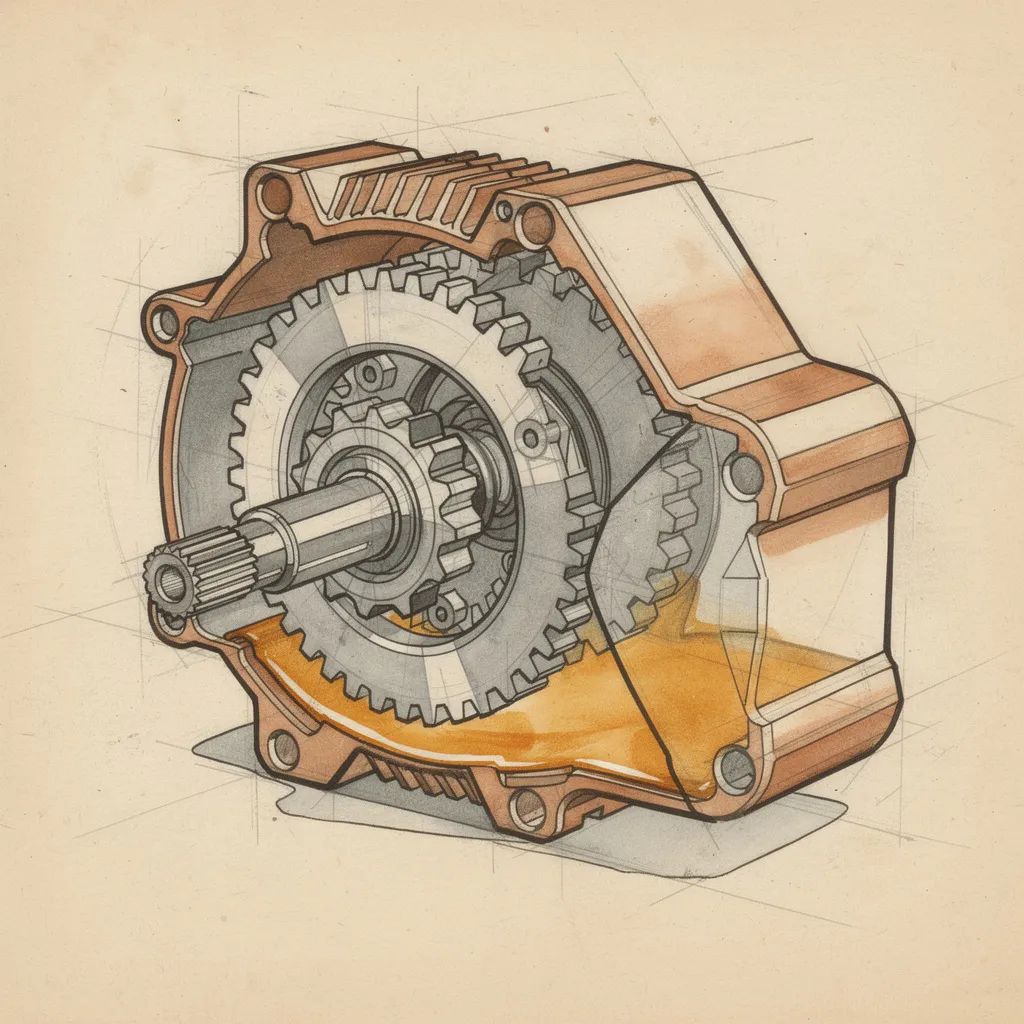
A crank-mounted gearbox inverts those tradeoffs. Gears run on fixed shafts in constant mesh, located by bearings rather than by cable tension. The chain or belt runs in a single straight line on one cog, so chainline never changes and cross-chain losses disappear. Mass moves from the rear axle to the center of the frame, low and sprung, where it improves handling rather than degrading suspension response.
The cost is honest: a gearbox carries some internal friction, and the unit weighs more than a derailleur alone. We publish those numbers rather than hiding them, because the system-level accounting — total drivetrain weight, sprung versus unsprung, maintenance over a season — is the comparison that matters.
Our design philosophy
We design for the shift that happens at the worst possible moment: under full load, mid climb, when backing off the pedals is not an option. Our engagement system uses helical shift dogs that ramp into mesh instead of slamming square faces together. A shift completes within 14 degrees of crank rotation whether you are soft-pedaling or standing on it.
Beyond that, the philosophy is mostly restraint. Cable actuation instead of electronics, because a cable can be fixed on a trailside. Published torque specs and rebuildable internals, because a transmission should outlast several frames. An open mounting spec, because a gearbox no one can build a frame around helps no one.
Every part that determines shift quality lives inside the housing. Nothing the trail can touch affects how the bike shifts.
Materials & manufacturing
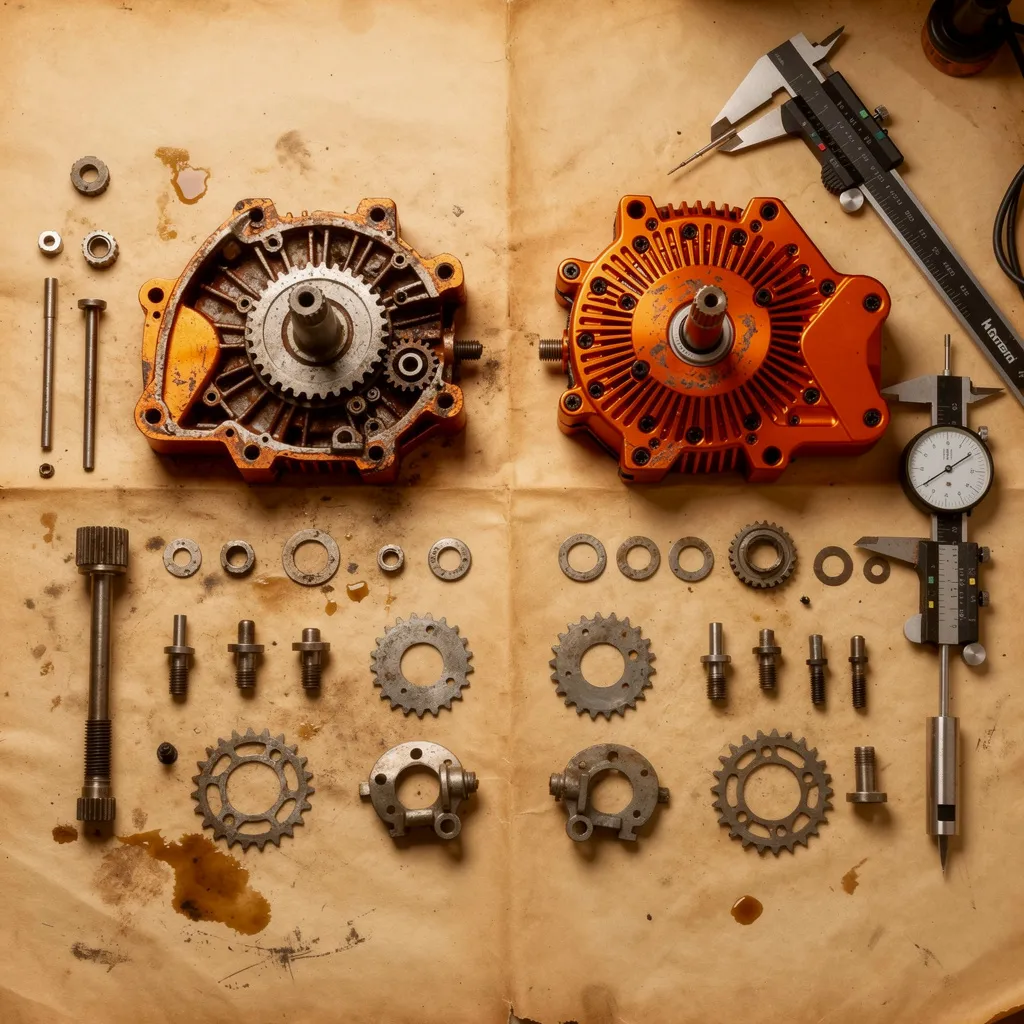
Housings are CNC-machined from 7075-T6 aluminum billet in our Charlotte, North Carolina facility, then hard-anodized. We machine in-house because housing tolerances drive everything downstream: bearing bores are held to ±10 µm so gear mesh is set by the machining, not by assembly-time shimming.
Gears are case-hardened alloy steel, ground after heat treatment and shot-peened at the roots. Shafts ride on sealed cartridge bearings sized from measured load spectra rather than catalog convention. The oil is a synthetic blend we specify for the operating temperature range of a bicycle gearbox — which is colder and more intermittent than the industrial cases most gear oils are formulated for.
Assembly happens in small batches, one technician per unit, with every gearbox serialized and its measured backlash and seal-test results kept on file.
Testing & validation
Every design passes a dynamometer protocol before it goes near a trail: sustained torque at rated load, impact spikes above rating, and shift cycling — hundreds of thousands of shifts under load, logged and torn down for inspection. Seals are validated with submersion and pressure-wash cycles, because that is how bikes are actually cleaned.
Dyno hours are necessary but not sufficient. Prototype units accumulate field miles with riders in the North Carolina mountains through full seasons of grit and clay before a design is frozen. Several of our internal changes — seal lip material, oil fill volume, shift-cable routing — came from field teardowns, not the test bench.